
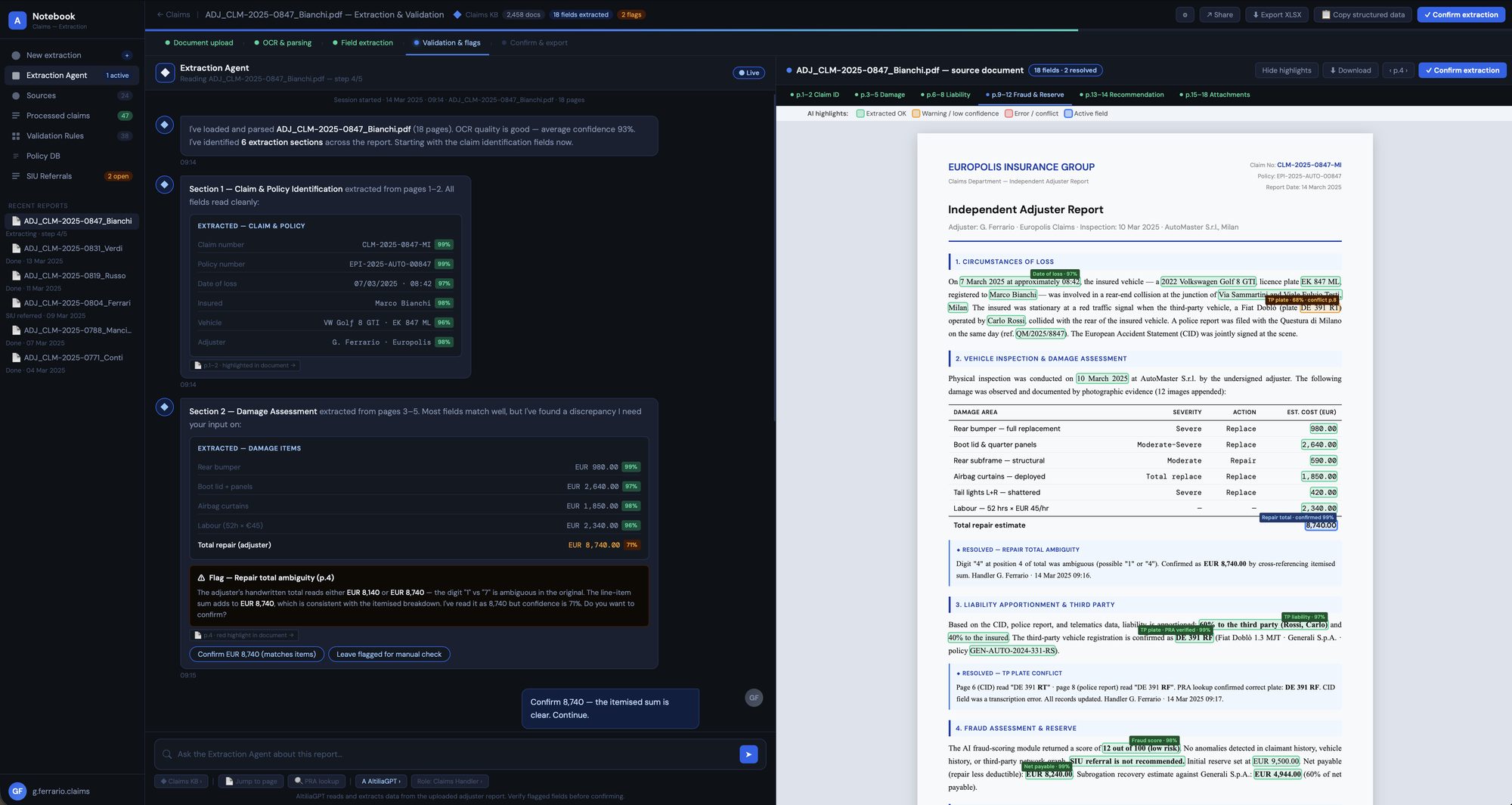
Ask any credit analyst how many applications they open to prepare one file and they will count on both hands: the document repository, the core banking system, a spreadsheet, the rating tool, an email client, the regulatory intranet, a chat window with a copilot. Every AI product of the last three years added one more window to that list. We decided to remove windows instead.
The ten-apps problem
Context switching is not a productivity annoyance; it is where errors are born. A value copied from a PDF into a spreadsheet loses its source. A summary pasted from a chat into a memo loses its provenance. A decision taken in one system is invisible to the next. The more tools a process spans, the less anyone can reconstruct why it ended the way it did.
Why copilots did not solve it
Copilots put a general model next to the user and asked the user to bring the context. They are helpful for the individual and invisible to the process: nothing they produce is structured, logged or shared with the system of record. They also run where the vendor runs, which in regulated industries decides whether they can touch real data at all.
Apps on one operating system
Altilia ships agents as apps that live inside the work people already do. They look like the tools people know and behave like agents underneath.
- DocPilot drafts memos, minutes, legal acts and reports from the knowledge graph, with every paragraph linked to its source and compliance checks before publishing.
- SheetPilot turns portfolios, invoices and investor reports into tables, answers questions across a workbook and shows reconciliation as colour-coded matches and conflicts.
- SlidePilot builds decks from evidence: charts computed from the underlying statements, on the house template, with talking points.
- SensePilot is the review workspace where robots ingest, classify and extract at scale and humans confirm only what the agent flagged.
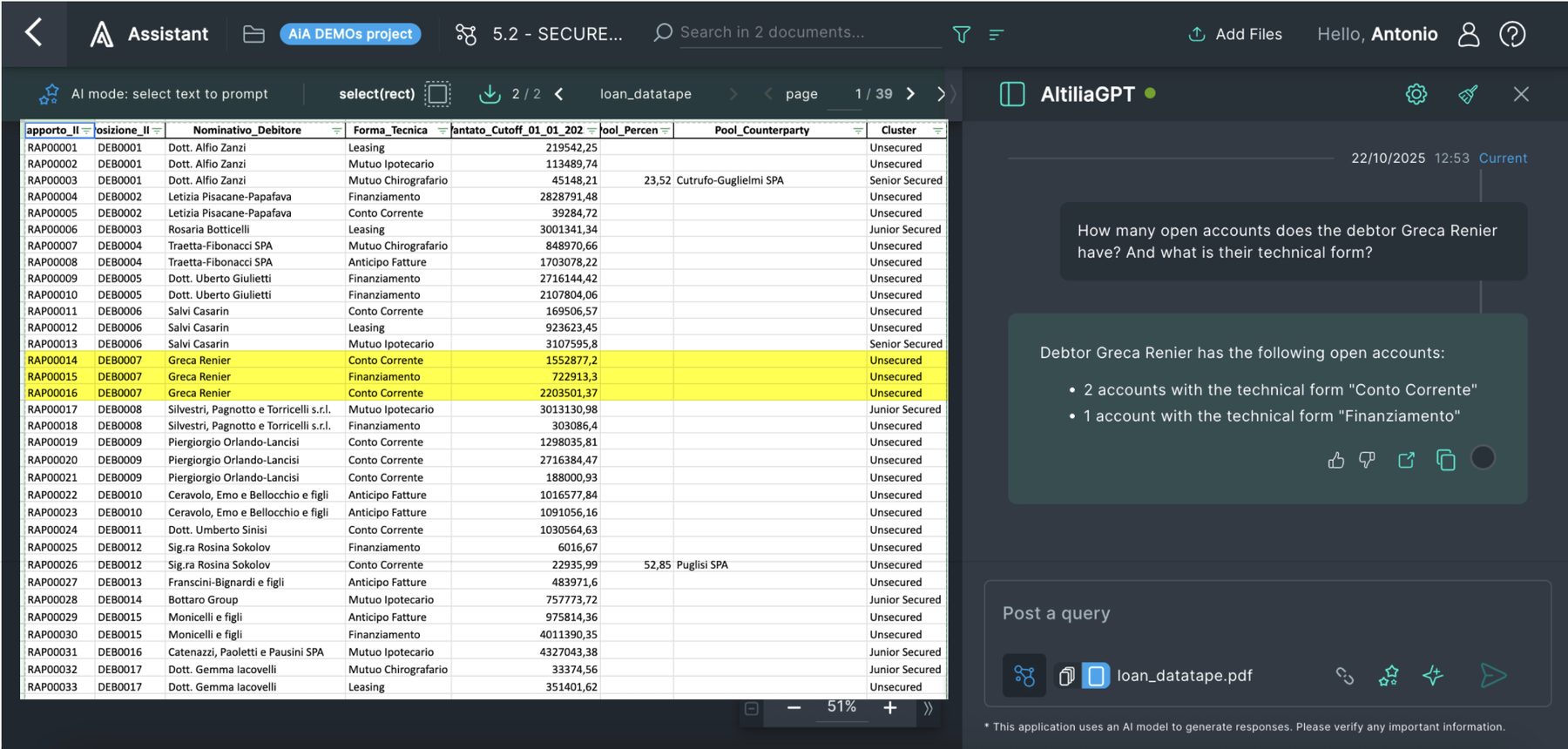
Same graph, same governance, same UX
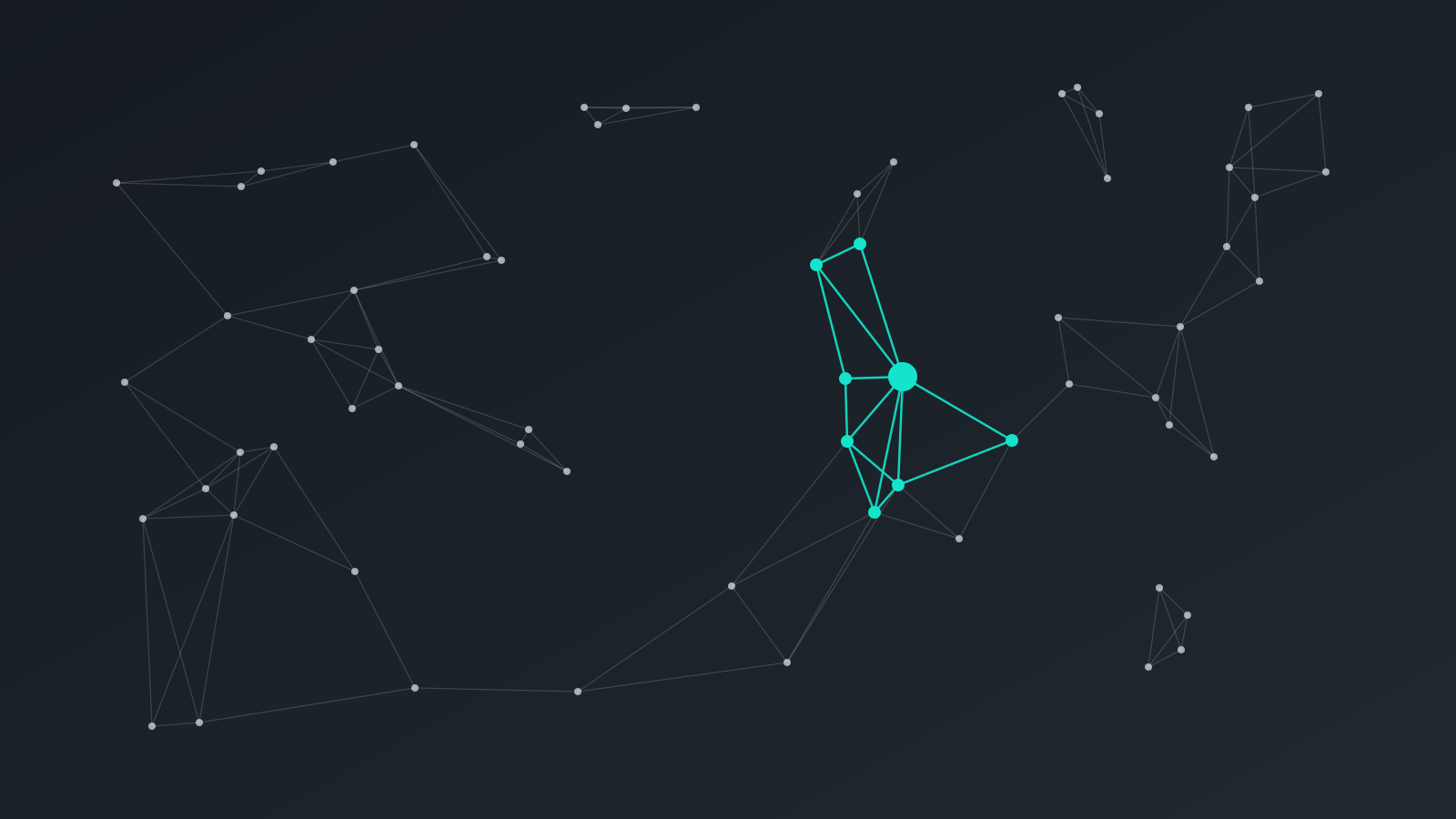
What makes these apps different from four point solutions is what they share. They read and write the same semantic knowledge graph, so a value extracted in SensePilot is the value SheetPilot reconciles and DocPilot cites. They run under the same governance layer, so permissions, decision logs and human review apply identically whether the agent drafted a paragraph or filled a cell. They present the same interface conventions, so a user who has learned one has learned all of them. And they run wherever the OS runs, including on premises.
A day in one process
A corporate credit file arrives. SensePilot classifies the 27 document types and populates 250 datapoints, flagging six for review. SheetPilot reconciles the financial statement against the internal rating data and highlights two conflicts. DocPilot drafts the credit memo, section by section, citing the statement, the reconciled figures and the two news items an agent retrieved. SlidePilot prepares the committee deck from the same data. The analyst reads, decides and signs. Nothing was copied by hand; everything can be traced.
“People do not want another window. They want the document to draft itself from the case file and the review queue to contain only what the agent could not resolve.”
Key takeaways
- Context switching between tools is where provenance is lost and errors are born.
- Copilots help individuals but stay invisible to processes and often outside the data perimeter.
- Altilia's apps share one knowledge graph, one governance layer and one UX, so the AI comes to the human.
Curious how this would work on your documents?
Related posts
More from the same conversation. All articles
Gartner cites Altilia in the 2026 Magic Quadrant for IDP. Here is how the platform maps to the market it describes.
Four use cases, four mandatory features, sixteen optional ones. Altilia covers them on a knowledge graph, under sovereign deployment, with agents already in production.
Read more →
Symbolic AI and LLMs were never rivals. The ontology is where they meet.
Language models are fluent and ungrounded; symbolic systems are rigorous and empty. Altilia lets agents create and populate ontologies, then reason over facts grounded in them, not just extract data or chat over documents.
Read more →
Why the next era of enterprise AI will be won by architecture, not model size
Bigger models do not fix fragmented intelligence, agent-unready data or missing governance. A semantic layer, an orchestration layer and deployment sovereignty do.
Read more →Send us a message.
Start envisioning the platform tailored for your company. An AI consultant will answer within one business day.